History Repeating
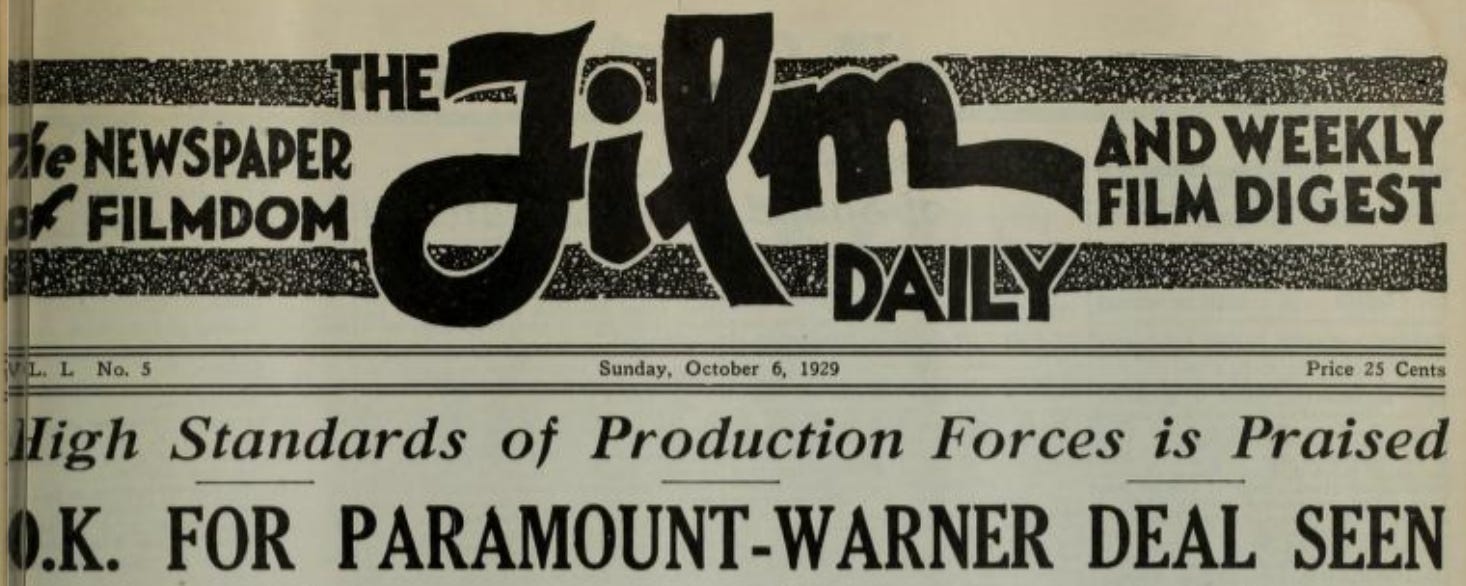
The first time Paramount tried to take Warner Bros.

“Prosperity is back,” beamed Paramount chairman Adolph Zukor in 1922, noting that the previous year nearly dealt a “mortal blow” to motion pictures. The industry had weathered a storm of growing public suspicion over sordid details coming from the entertainment industry in the wake of producer William Desmond Taylor’s murder and the rape/murder trials and acquittal of comedian Fatty Arbuckle. To ensure future confidence in motion pictures, Zukor helped bring in a self-censoring body to keep the concerned government and public happy. Paramount was coming out of a period of growth.
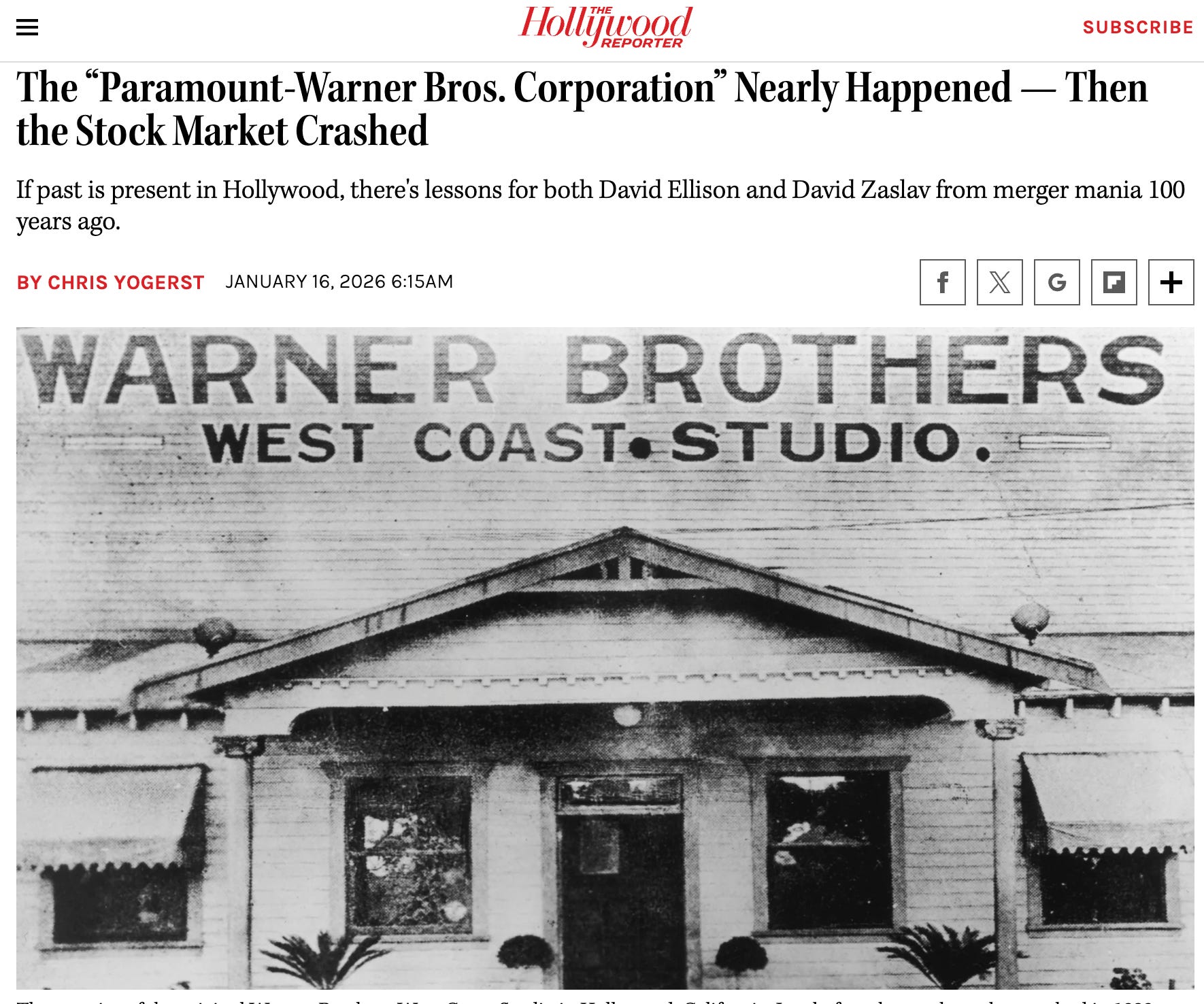
With David Ellison ramping up what may be an ugly battle to force a sale of Warner Bros. to Paramount, the move mirrors Hollywood a century ago when it was also in a period of change amid technological innovation. In the 1920s, Paramount pushed unsolicited offers for the newly incorporated Warner Bros. while Warners pushed back. Zukor streamlined the star system, brought in Postmaster General Will Hays to head up the self-censorship office, and set the bar for rapid expansion in Hollywood. On paper, Paramount had every advantage as Warner Bros. carried debt to purchase studio space on Sunset Boulevard and was arguably vulnerable to a takeover.
The Warner brothers had other ideas. Harry Warner, the eldest brother and studio president, was not to be underestimated or bullied.
Read my full column at The Hollywood Reporter